Brass and copper grades for machined parts: C360, C260, C464 and C110 compared
October 7, 2026
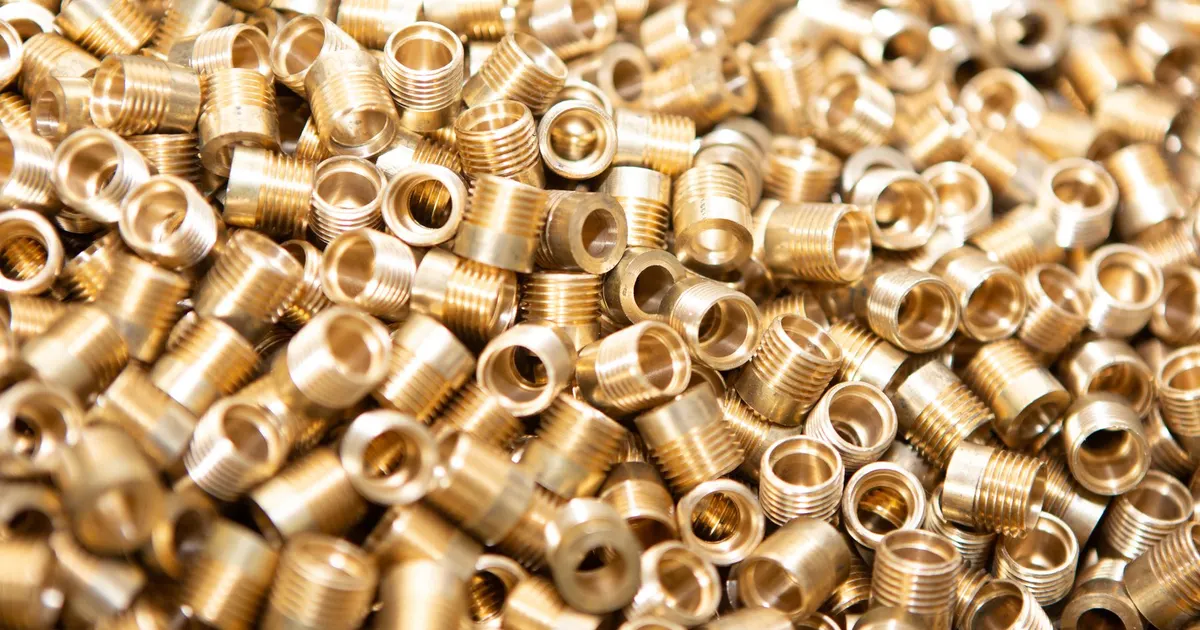
For turned and drilled parts, brass C360 is the default because it machines faster than any other common copper alloy. Pure copper C110 is chosen for conductivity, not for ease of cutting. The rest of the family sits between them, and the choice comes down to what the part must conduct, resist and comply with.
The grades worth knowing
C360, free-cutting brass. About 61 percent copper, 3 percent lead and the rest zinc. The lead breaks the chip into short pieces, so the tool runs fast and the surface comes out bright. It is the standard for screw-machine parts, fittings, nozzles and inserts. It is usually cross-referenced to EN CW603N or CW614N and JIS C3604. Check the exact equivalent in the RFQ, because the cross-references are close and not identical.
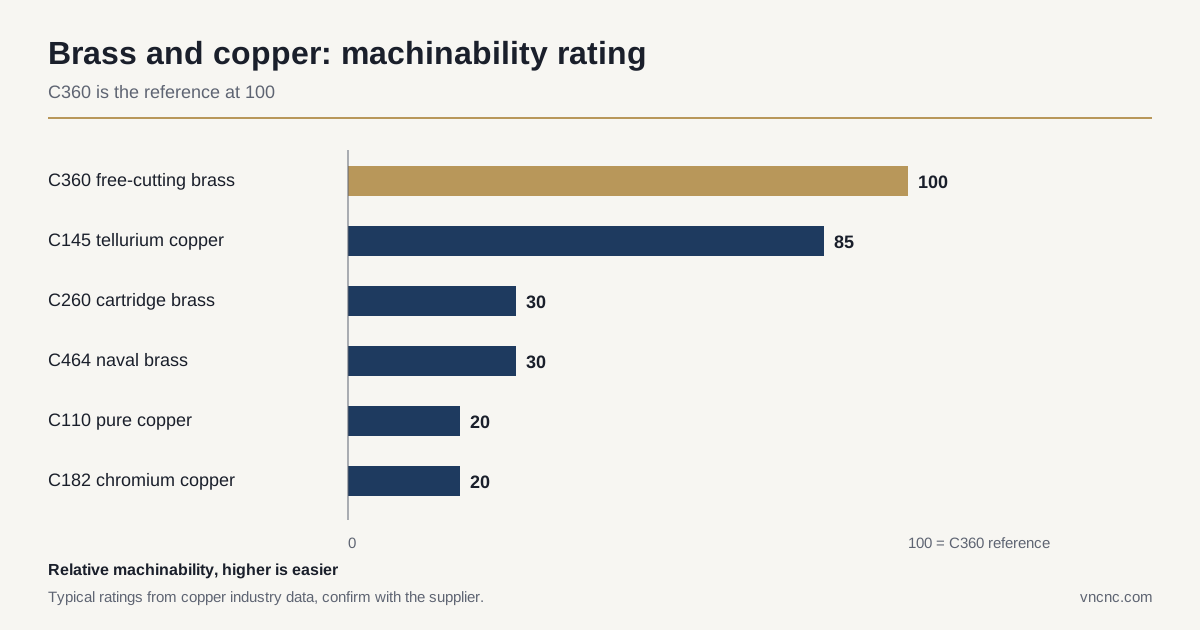
C260, cartridge brass. About 70 percent copper and 30 percent zinc, with no lead. It forms and draws very well, which is why it is used for stamped and drawn parts. It machines poorly, with stringy chips and a machinability rating around 30. Use it when the part is formed first and machined lightly.
C464, naval brass. About 60 percent copper, 39 percent zinc and 1 percent tin. The tin improves resistance to dezincification in seawater. It machines at a rating around 30 and is used for marine fittings and shafts.
C110, electrolytic tough pitch copper. At least 99.9 percent copper, with high electrical and thermal conductivity. It is soft and gummy to machine, with a rating around 20. Chips are long and burrs are heavy. Common for busbars, terminals and heat sinks.
C145, tellurium copper. Copper with a small addition of tellurium that makes it free-machining. It keeps about 90 percent of the conductivity of pure copper and has a machinability rating around 85. It is the standard answer when a part must be both conductive and machined to detail.
C182, chromium copper. Copper with a small chromium addition that is precipitation hardened. It keeps good conductivity at higher strength and holds its hardness at heat. Used for welding electrodes and heat-resistant contacts. Machinability rating is around 20.
Side by side
| Grade | Machinability rating | Conductivity | Typical use |
|---|---|---|---|
| C360 | 100 (reference) | Low, about 26 percent IACS | Turned fittings, inserts, nozzles |
| C260 | About 30 | Moderate | Drawn and stamped parts |
| C464 | About 30 | Moderate | Marine hardware |
| C110 | About 20 | Very high, about 100 percent IACS | Busbars, terminals |
| C145 | About 85 | High, about 90 percent IACS | Conductive turned parts |
| C182 | About 20 | Good, about 80 percent IACS | Electrodes, heat-resistant contacts |
These are typical values from the copper industry. Exact figures vary with temper and the source, so confirm the grade and the condition with the supplier.
What the rating does to your quote
The machinability rating is a relative measure of how easily the grade cuts. A grade at 20 does not take five times as long as one at 100, but the direction is clear:
- Cycle time. C360 runs at high surface speed and short chips. C110 needs sharper tools, lower feeds and chip breaking, so the cycle grows.
- Burrs and finish. Copper smears and leaves burr. Expect more deburring work, and say how much on the drawing. The deburring guide shows how.
- Tool life. Both brass and copper are easy on tools. Wear is rarely the issue.
- Scrap and material price. Copper is priced by market and moves with it. Ask the quote to state the date of the metal price and how long it holds.
Where a part needs only moderate conductivity, C145 can save more in machining than it costs in material.
Lead and compliance
C360 contains lead, around 2.5 to 3.7 percent by weight. That makes it machinable, and it also brings regulation:
- Drinking water contact. Many markets limit lead in wetted parts and require low-lead or lead-free brass. Silicon brasses such as C69300 are used in some cases. Name the regulation and let the shop propose an alloy.
- Electronics and RoHS. The EU directive carries an exemption for lead in copper alloys up to a stated limit. Check the current text for your product category.
- Toys, food contact and consumer goods. Rules differ by country. State where the product will be sold.
Do not assume. If lead matters, write it in the first message along with the standard or the regulation. Changing alloy after the quote changes the price and the lead time.
Machining notes
Short notes on how each family cuts:
- Brass C360 can often be cut dry or with light coolant. Chips are short and clean. Sharp tools with zero or slightly negative rake avoid grabbing.
- Copper C110 and C182 need sharp tools with positive rake, good lubrication and chip control. Heavy burrs form at every exit edge.
- Thread cutting works well in C360. In soft copper, threads can deform and strip under load, so consider a thread insert or a harder grade.
- Thin walls move because brass and copper are soft. Allow more material and light finishing cuts.
Finishing
Brass and copper tarnish. Plating and finishing choices include:
- Nickel or chrome plating for appearance and wear
- Tin plating on copper terminals for solderability and corrosion protection
- Silver plating for conductivity at contacts
- Clear lacquer or passivation to slow tarnish on visible parts
Say whether the part is plated and which standard applies. A plated part needs a clean surface and a controlled edge break, so cover the edge condition in the drawing. The finishing guide goes through coating options.
Availability
Brass and copper bar in common sizes is available through local distributors in Vietnam, and some grades are imported to order. C360 round bar is the easiest to find. C145 and C182 are specialist grades and often come from import on a lead time. The material availability reference lists what is usually stocked. If you need a certified heat with a mill certificate, say so in the first message because it changes the supplier list and the schedule.
How to name the grade
Write the grade, the standard and the temper if it matters:
Material: brass C36000 (CW603N acceptable), free-cutting, half hard. Lead content acceptable. Parts are not for drinking water contact.
The last sentence saves a round of questions. If you accept a substitute, say so. The substitution guide shows how to write it so the quote reflects the choice.
Common faults to avoid
Four mistakes show up often on brass and copper orders:
- Naming “brass” without a grade. Brass is a family. A shop will pick the cheapest grade that fits, which may not suit the part.
- Mixing leaded and unleaded stock. If compliance needs lead-free, the whole route must stay lead-free, including cleaning and any rework.
- Forgetting tarnish in transit. Bright brass darkens in humid air. Use bagging with a vapour inhibitor or a light lacquer for visible parts.
- Soft copper handled roughly. Parts dent and burr in bulk bins. Ask for separators or individual bagging.
Next step
Before you request a quote on a brass or copper part:
- Is the part turned, drawn or formed, and which grade suits that route?
- Does it need to conduct, and how well?
- Does lead matter for your market or product?
- Have you named the grade, the standard and the temper?
- Have you said whether a substitute is acceptable and how edges and plating are handled?
Then send the drawing and we will quote the grade and confirm the stock position on the quote.
Questions we get on this
Why is C360 the usual brass for turned parts?
It contains about 3 percent lead, which breaks chips short and lets the tool run fast. It is the reference grade for machinability at 100, and most other copper alloys are rated against it.
Can I use C110 copper instead of brass for conductivity?
Yes for conductivity, but pure copper is soft and gummy to machine and tends to leave burrs. If the part also needs to be turned or tapped, tellurium copper C145 keeps most of the conductivity and machines far better.
Is leaded brass allowed for my product?
It depends on the market and the use. Drinking water parts and some consumer products require low-lead or lead-free alloys. Name the regulation in the RFQ so the shop can choose a compliant alloy.
Have a part like this?
Send the drawing. We shortlist the shop we place it with that run the process and material, and answer within 24 business hours.
Send a drawing