Carbon and alloy steels for machined parts: 1045, 4140 and 4340 compared
October 11, 2026
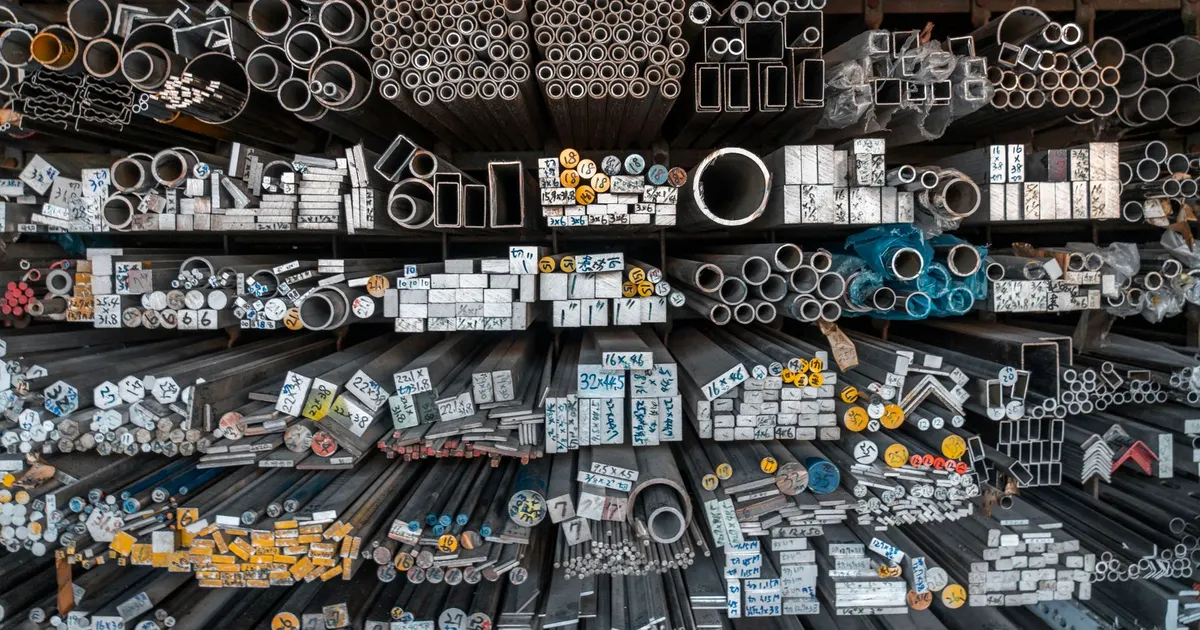
For machined parts that need strength at a fair price, 1045 is the plain carbon choice, 4140 is the general alloy choice and 4340 is the step up for large or highly stressed parts. All three rust, so the finish matters as much as the grade.
The three grades
1045, medium carbon steel. About 0.45 percent carbon, with manganese and no significant alloy. It is cheap, widely stocked and machines at a rating of about 55 to 60 against the free-cutting steel reference. It can be flame or induction hardened on the surface, and it can be quenched and tempered, but it hardens in thin sections only. Typical uses: shafts, pins, gears with moderate load, base plates and general mechanical parts. Common equivalents are EN C45 and JIS S45C.
4140, chromium-molybdenum alloy steel. About 0.40 percent carbon, with roughly 1 percent chromium and 0.2 percent molybdenum. It hardens deeper than 1045 and keeps its strength at moderate temperature. It is supplied annealed or pre-hardened. Typical uses: shafts, spindles, tool holders, fixtures, gears and hydraulic components. Common equivalents are EN 42CrMo4 and JIS SCM440.
4340, nickel-chromium-molybdenum alloy steel. About 0.40 percent carbon, with nickel near 1.8 percent, chromium and molybdenum. The nickel adds toughness and lets it harden through large sections. It is used for heavily loaded shafts, gears and aerospace-type components. It costs more and machines harder than 4140. Common equivalents are EN 34CrNiMo6 and a close JIS grade, SNCM439. Check the exact cross-reference in the RFQ, since they are close and not identical.
Side by side
| Grade | Typical supply condition | Typical tensile strength | Machinability rating | Typical use |
|---|---|---|---|---|
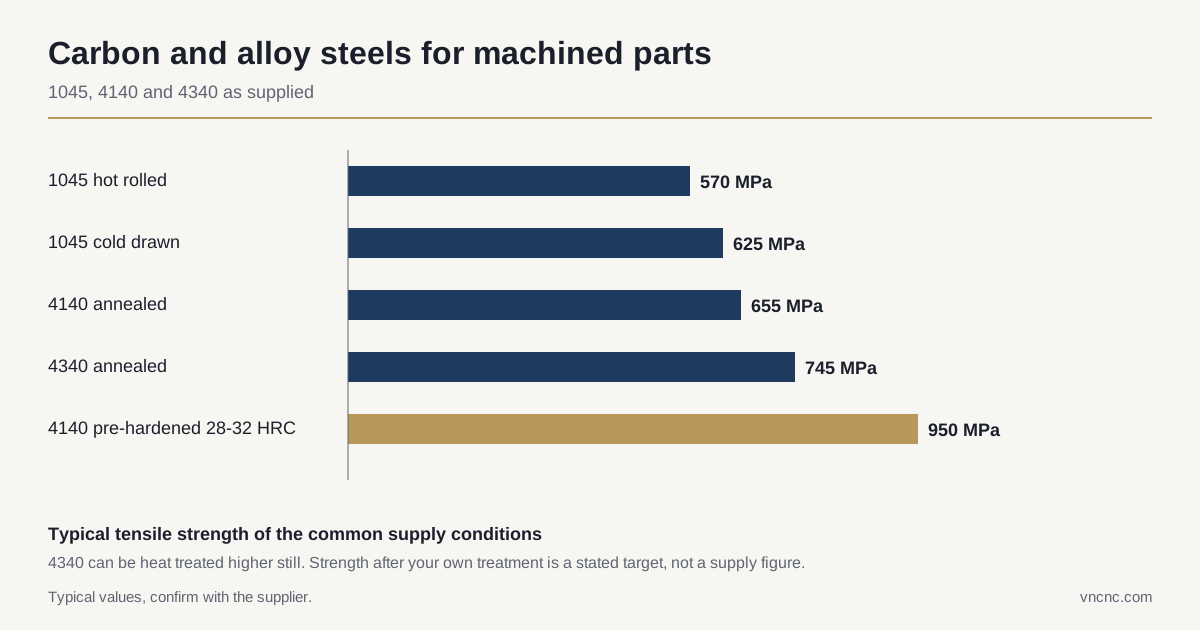
| 1045 | Hot rolled or cold drawn | About 570 to 625 MPa | About 55 to 60 | General shafts, pins, plates |
| 4140 | Annealed | About 655 MPa | About 65 | Parts to be hardened later |
| 4140 | Pre-hardened, 28 to 32 HRC | About 900 to 1,000 MPa | About 50 to 55 | Finished parts with no further heat treatment |
| 4340 | Annealed | About 745 MPa | About 50 | Large or highly stressed parts |
The numbers are typical and depend on bar size and supplier. Confirm the condition and the properties on the mill certificate.
Which condition to buy
The condition of the bar matters as much as the grade:
- Annealed. Soft, easy to machine, best when the part will be hardened afterwards. The part machined from annealed bar moves in the furnace, so leave stock for the finishing cut or grind.
- Normalised. Uniform structure, a bit harder than annealed. Used where the part will be machined and then used as is.
- Quenched and tempered, also called pre-hardened. The mill has already hardened the bar to a stated range. Machining is slower but the part needs no further treatment, and it does not move in a furnace. Typical hardness for 4140 is 28 to 32 HRC.
- Cold drawn. The bar has been drawn to size, giving a tight diameter and a higher strength. Residual stress can move the part when material is removed from one side.
If the part has to be hard and accurate, the heat treatment guide explains allowances and the order of operations.
What the grade does to your quote
Three effects:
- Cycle time. 1045 cuts easily. Pre-hardened 4140 and annealed 4340 cut slower, and tool wear is higher. Time on the machine grows with hardness.
- Heat treatment. A part that is hardened afterwards adds a step, a transport leg and a lead time, and may add grinding.
- Material cost. 1045 is cheapest, 4140 costs more and 4340 costs most. The difference depends on market and bar size.
Where 1045 does the job, 4140 adds cost that does not show in function. Where the part is loaded hard or needs hardness through a thick section, the extra is well spent.
Rust and finishes
None of these steels resists rust. A machined surface that is bare and clean will show rust within days in humid air, and during sea freight it can show within hours. Options:
- Black oxide. A thin conversion coating with oil. Cheap and light, good for hidden parts.
- Zinc plating, with clear or yellow passivation. Common and low cost, with controlled thickness.
- Phosphate coating with oil. Good for sliding parts and as a paint base.
- Electroless nickel. Even coverage with good wear and corrosion resistance. Costs more.
- Oil and packing. For parts that will be coated later by the buyer, a rust-preventive oil and a barrier packing may be all that is needed.
Say which one applies, and say how the part is protected in transit. The finishing guide describes the common choices. A plated part also needs a controlled edge break, so give the edge condition on the drawing.
Material certificates and traceability
If the part carries load or you need to prove the grade, ask for a mill certificate for the bar. It states the heat number, the chemistry and, in many cases, the mechanical properties. Heat treatment adds its own record. Say in the first message if you need a certificate, because it affects the choice of supplier and the schedule. In Vietnam, common carbon steels are stocked locally, while certified alloy bar such as 4340 is often imported to order.
Substitution
If you accept an equivalent, name it. EN 42CrMo4 is close to 4140 and EN C45 is close to 1045. A substitute can shorten the lead time or lower the price. An unstated substitute can fail an audit. The substitution guide shows how to write the permission.
What to put in the RFQ
A clear request names the grade, the condition and the finish:
Material: AISI 4140, pre-hardened 28 to 32 HRC, mill certificate required. Finish: black oxide and oil. EN 42CrMo4 acceptable if equivalent certificate is supplied.
That single paragraph removes four questions the shop would otherwise ask.
Machining notes by grade
- 1045 cuts with standard carbide inserts and stable chips. Surface finish is good. Burrs are moderate. It is the grade where a shop can run fast and keep cost low.
- 4140 annealed cuts easily at moderate speed and gives a clean surface. It is the usual choice for parts that go to heat treatment afterwards.
- 4140 pre-hardened needs rigid setups, sharp coated inserts and lower speed. Tool wear is visible within a run. Thread cutting and deep drilling take more care.
- 4340 is tough and tends to work harden if a tool rubs. Keep tools sharp and the feed positive. Large sections carry stress that is released as material is removed, so rough first and finish after a rest.
Where each grade falls short
Choosing a grade also means knowing its limit:
- 1045 does not harden deep. A thick shaft quenched in oil is hard at the surface and soft in the core. If strength through the section matters, step up to 4140.
- 4140 is not stainless and not very tough at low temperature. For cold service or shock loading, ask for a Charpy requirement or move to 4340.
- 4340 costs more and can be harder to find in small bar sizes. It is also more sensitive to hydrogen embrittlement after plating, so plated high-strength parts need a bake step after coating. State this on the drawing.
If the part is loaded in ways you are not sure about, give the shop the load case and let it propose a grade. That costs less than a failure in service.
Next step
Before you send the drawing, check:
- Is 1045 enough, or does the load call for 4140 or 4340?
- Do you want the part supplied in a pre-hardened condition, or hardened after machining?
- Have you chosen a rust protection and said how the part ships?
- Do you need a mill certificate and a heat treatment record?
- Have you said which equivalents are acceptable?
Then send the drawing and we will quote the grade and the condition and confirm the stock position on the quote.
Questions we get on this
Should I buy 4140 annealed or pre-hardened?
Pre-hardened 4140 at about 28 to 32 HRC can be machined to final size with no heat treatment step and gives good strength. Annealed 4140 machines more easily and is hardened afterwards, but the part moves in the furnace and needs finishing.
What is the difference between 4140 and 4340?
4340 adds nickel, which gives deeper hardening and better toughness in large sections. It costs more and is harder to cut. For most shafts and tooling under moderate size 4140 is enough.
How do I stop carbon steel rusting?
Specify a coating or finish such as black oxide, zinc plating, phosphate or electroless nickel, or oil the parts and say how they are packed. Bare carbon steel rusts in humid transport.
Have a part like this?
Send the drawing. We shortlist the shop we place it with that run the process and material, and answer within 24 business hours.
Send a drawing